Corpus Christi’s newest school weight numbers, and how to read them
We meant to explain why our best local child weight number was from 2013. Then we found 2023-24 school fitness data for Corpus Christi ISD.
For years, the most specific child weight number anyone could quote for Corpus Christi came from 2013. We set out to write a post explaining why that was the best we had. Then we went through the newest school fitness file from the Texas Education Agency, line by line, and found something better: Corpus Christi ISD numbers from the 2023-24 school year.
Here is what they say, what they do not, and what to do with them as a parent.
The old number
A 2018 paper by researchers at Texas A&M University-Corpus Christi reported that in 2013, 53.36% of CCISD elementary students assessed with FitnessGram were overweight or obese. That figure combined overweight and obesity, covered one district, and is now 13 years old. A child who started kindergarten that year is about 18 now.
The newer number
Texas law requires districts to check the fitness of students in grades 3 to 12 who are in a PE class or a substitute each year, and send the results to TEA. TEA posts a large spreadsheet of those results by campus, grade and gender. The newest one covers 2023-24 and was created in November 2025.
FitnessGram does not label children “overweight” or “obese.” It sorts each child’s body mass index (BMI) into a Healthy Fitness Zone or, outside it, “some risk” or “high risk.” We added up every CCISD row in the file, about 11,100 students with a BMI recorded, and compared them with the state total of about 2.1 million.
| Grades (2023-24) | CCISD some risk | CCISD high risk | CCISD outside healthy zone | Texas outside healthy zone |
|---|---|---|---|---|
| 3-5 | 17.1% | 30.3% | 47.4% | 42.8% |
| 6-8 | 19.8% | 29.5% | 49.3% | 43.1% |
| 9-12 | 21.8% | 22.2% | 44.0% | 38.9% |
| All tested | 19.3% | 27.9% | 47.2% | 42.2% |
Put simply: in 2023-24, a little under half of CCISD students who were measured had a BMI in FitnessGram’s some-risk or high-risk range, about five points higher than Texas as a whole. Roughly 3 in 10 elementary and middle schoolers measured were in the high-risk group.
How to read it honestly
- It is not an obesity rate. “Some risk” and “high risk” are FitnessGram categories, not medical diagnoses, and they do not line up exactly with the overweight and obesity cutoffs doctors use. Do not compare this table directly with the 2013 figure or with national obesity rates.
- Not every child is in it. Only students in a PE course or substitute are tested, and TEA hides any group of fewer than five students. We left out the one CCISD row that was masked.
- It is one district. Flour Bluff, Calallen, Tuloso-Midway, West Oso, Robstown and other Nueces County districts appear in the file separately. We did not combine them into a county number here.
- It is our own math. TEA publishes the campus rows; the district totals above are our sums of those rows, weighted by how many students were tested.
How it fits with the state picture
The newest statewide child obesity survey points the same direction. UTHealth Houston’s Texas Child Health Status Report, updated August 2025 with 2021-2023 Texas SPAN data, found that 1 in 4 Texas school-age children and adolescents have obesity, compared with 1 in 5 nationally. SPAN does not publish a Nueces County figure, and neither does the 2025 Corpus Christi-Nueces County Community Health Assessment for children. The school file is the closest local look we have found.
Why this matters less for your child than you might think
A district number answers a community question: where should help go? Your question is different: how is my child doing? No average can answer that. Your child’s pediatrician can, using your child’s own growth chart over time. If a number on a school report worries you, that visit is the right place to start, and a calm conversation at home matters more than the number itself.
We hold ourselves to a few rules with data like this. We date every statistic. We do not stretch an adult rate onto children or a state rate onto the county. And when we find a better number than the one we have been using, we say so out loud, as we are doing today.
One next step this week
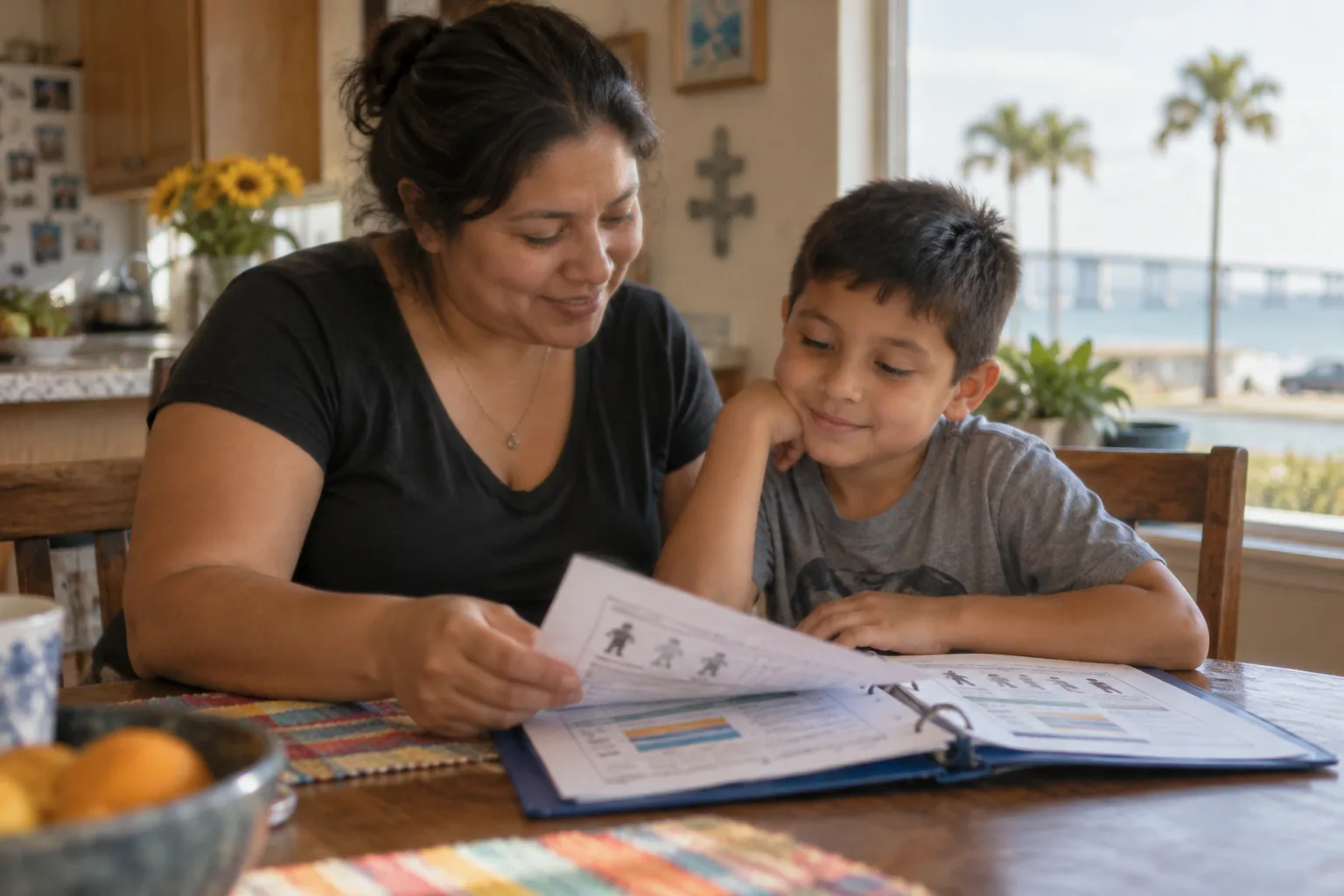
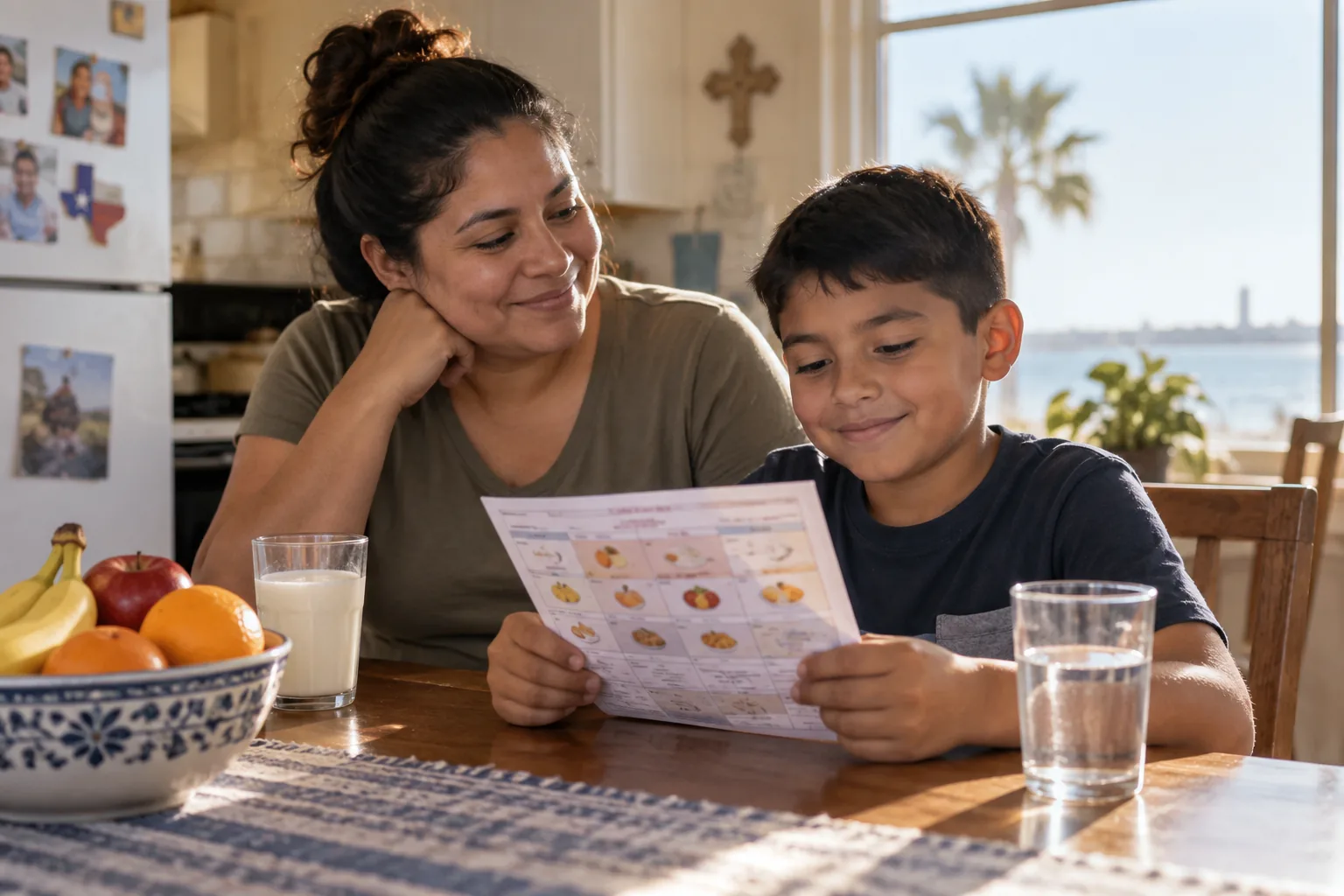
If your child is in grade 3 or higher, ask the PE teacher or school office how to see your child’s FitnessGram results. Read the report together as a snapshot, not a grade, and bring it to your next checkup. Our earlier post on reading a FitnessGram report without scaring your child walks through it.
That is also why Ignite Fit exists: a free ten-week health season for children 8 to 17 in Nueces County, built around movement, real food and family. Parents are welcome at every session, and no parent is ever asked to drop off and leave. We are Catholic and open to everyone; prayer is offered and never required. Season One dates will be announced soon.
Sources
- Texas Education Agency, Physical Fitness Assessment Initiative: Fitness Data – aggregated campus-level fitness data, newest 2023-24; masking of groups under five students
- TEA, 2023-24 PFAI and FitnessGram Data Analysis workbook (XLSX, 21 MB, created November 2025) – CCISD and statewide BMI some-risk/high-risk counts by campus, grade and gender (district totals summed by Ignite His Glory)
- Ajisafe, Garcia and Fanchiang, Frontiers in Public Health, 2018: Musculoskeletal Fitness Measures Are Not Created Equal: An Assessment of School Children in Corpus Christi, Texas – 2013 CCISD elementary figure, 53.36% overweight and obese
- UTHealth Houston Michael & Susan Dell Center for Healthy Living, Texas Child Health Status Report: Child Obesity (updated August 4, 2025) – 2021-2023 Texas SPAN; 1 in 4 Texas students with obesity vs 1 in 5 nationally
- Texas Education Code, Section 38.101 – annual fitness assessment, grades 3-12
- Corpus Christi-Nueces County Public Health District, 2025 Community Health Assessment page
Not medical advice. Ignite His Glory is a community and faith organization, not a healthcare provider. We explain publicly available guidance so families can have better conversations with a doctor. Always talk with your child’s clinician before changing diet, exercise or any medication.
Ten weeks. One coach. No cost to your family.
Ignite Fit puts this into practice for children ages 8 to 17 in Corpus Christi — movement, a teaching kitchen and a family that learns alongside the child.
More from the blog.

The beloved physician: St. Luke’s feast and your child’s yearly checkup
The Church remembers St. Luke, patron of physicians, on Sunday, October 18. Here is what a physician saint can say to a parent deciding whether to book this year’s checkup.
Corporal works of mercy, explained for a 9-year-old
Help your child understand seven ways to care for a neighbor, then choose one small act your family can do together.

Flu shots this fall: what changed in Washington, and what did not
The federal childhood vaccine schedule has been in court all year. Here is where your child’s flu shot stands in October 2026, which kids are at higher risk, and where to get one in Nueces County.