A temple, not a trophy: a Catholic case for taking health seriously
“Your body is a temple” was never meant as a scolding. Here is what St. Paul and the Catechism actually say about caring for the body, and what it looks like for a family in Corpus Christi.
Most of us learned the line young: your body is a temple. Too often it was said to shame someone, usually about a cigarette, a second plate or a pair of jeans that no longer fit.
That is not how St. Paul meant it, and it is not how the Church teaches it. Read in full, the idea is much kinder and much more useful for a family trying to raise healthy kids in Corpus Christi.
What Paul actually wrote
The line comes from his first letter to the Corinthians:
“Do you not know that your body is a temple of the holy Spirit within you, whom you have from God, and that you are not your own? For you have been purchased at a price. Therefore, glorify God in your body.” (1 Corinthians 6:19–20)
Notice what comes first. Before any instruction, Paul tells people who they are: loved, dwelt in, bought at a great price. The body matters because God chose to live there. Caring for it follows from that; it is not the price of admission.
The last words, “glorify God in your body,” are where our name comes from. Ignite His Glory is, at its root, an attempt to take that sentence literally.
What the Church adds
The Catechism of the Catholic Church builds on Paul in three places worth knowing.
- The body is good. The human body “shares in the dignity of ‘the image of God,’” and we are obliged “to regard [the] body as good and to hold it in honour since God has created it and will raise it up on the last day” (CCC 364).
- Health is a gift we look after. “Life and physical health are precious gifts entrusted to us by God. We must take reasonable care of them, taking into account the needs of others and the common good” (CCC 2288). The word is reasonable. Not perfect.
- Temperance, not extremes. The virtue of temperance “disposes us to avoid every kind of excess,” including “the abuse of food” (CCC 2290).
Pope Francis put it simply in Laudato Si’: “Learning to accept our body, to care for it and to respect its fullest meaning, is an essential element of any genuine human ecology” (no. 155). Accept first, then care.
A temple, not a trophy
Here is the part many people miss. The very next paragraph of the Catechism warns against going too far the other way. It rejects “a neo-pagan notion that tends to promote the cult of the body, to sacrifice everything for its sake, to idolize physical perfection and success at sports” (CCC 2289).
That matters for children. A child who hears “temple” as “you must look a certain way” has been taught the opposite of what the Church means. A body is not holy because it is thin, fast or strong. It is holy because a person lives in it, and God lives in that person.
A temple is cared for because of who lives there, not because of how it looks from the street.
So in our programs you will never hear a child’s worth tied to a scale, a jersey size or a race result. We talk about energy, sleep, water, strength and joy. We celebrate effort.
Why this is not only a private matter
The Catechism does not leave health on the shoulders of each family alone. In the same paragraph it says society should help people reach the living conditions that let them grow and mature: “food and clothing, housing, health care, basic education, employment, and social assistance” (CCC 2288).
In Nueces County that is not abstract. The 2025 Corpus Christi-Nueces County Community Health Assessment reports that 34.4% of adults here report no physical activity or exercise, against 27.6% in Texas and 23.7% nationally, and 44.0% of adults have obesity (CDC PLACES, 2021–2022). Among Texas school-age children, only 23% were active for 60 minutes or more on all seven days of the previous week, according to UTHealth’s Texas SPAN survey (2021–2023).
Those numbers are not a verdict on anyone’s faith or willpower. Heat, long shifts, two jobs, unsafe streets and tight budgets all shape how a family moves and eats. Caring for the temple is something a parish and a city do together, not something we lecture a tired parent about.
What this looks like at home
None of this requires a gym membership or a new diet. A few small, faith-shaped habits:
- Say the good thing first. Before you correct a habit, tell your child their body is a gift and it is good.
- Bless the ordinary. Grace before a meal slows everyone down. A short prayer before a walk or a game turns movement into thanks instead of punishment.
- Keep Sunday as rest. Rest is care too. A body that never stops cannot be well.
- Talk about what bodies can do, not what they look like: climb, carry groceries, hug a grandparent, serve at Mass.
- Take reasonable care. Keep up with checkups and ask your child’s doctor the questions that worry you. That, too, is stewardship.
Where Ignite Fit comes in
Ignite Fit was built on exactly this idea. Each week has three parts: Move, Fuel and Faith. The Faith part is short, and it always points back to the same truth Paul wrote: you are loved, and your body is worth caring for.
We are Catholic, and we are open to everyone. Prayer is offered and never required, and no family is asked about its faith to take part.
Season One is for 25 children ages 8–17, and dates will be announced soon. It is free. Parents are welcome at every session, and no parent is ever asked to drop off and leave.
Your next step this week: at one family meal, read 1 Corinthians 6:19–20 aloud and ask your kids what they think it means. Then, to hear when Ignite Fit registration opens, email service@ignitehisglory.com or call 361-765-2126.
Sources
- 1 Corinthians 6:19-20, New American Bible (vatican.va) – “your body is a temple of the holy Spirit… glorify God in your body.”
- Catechism of the Catholic Church, no. 364 – the body shares in the dignity of the image of God; regard it as good and hold it in honour.
- Catechism of the Catholic Church, nos. 2288-2290 – respect for health; reasonable care; society’s role in living conditions; warning against the cult of the body; temperance.
- Pope Francis, Laudato Si’ (2015), no. 155 – “Learning to accept our body, to care for it and to respect its fullest meaning…”
- 2025 Corpus Christi-Nueces County Community Health Assessment – adults reporting no physical activity or exercise 34.4% Nueces vs 27.6% Texas vs 23.7% U.S.; adult obesity 44.0% (CDC PLACES/BRFSS 2021-2022).
- UTHealth Dell Center, Child Physical Activity in Texas – Texas SPAN 2021-2023 (updated Aug 4, 2025): only 23% of Texas school-age children active 60+ minutes on all 7 days; average 4.3 days/week.
Not medical advice. Ignite His Glory is a community and faith organization, not a healthcare provider. We explain publicly available guidance so families can have better conversations with a doctor. Always talk with your child’s clinician before changing diet, exercise or any medication.
Ten weeks. One coach. No cost to your family.
Ignite Fit puts this into practice for children ages 8 to 17 in Corpus Christi — movement, a teaching kitchen and a family that learns alongside the child.
More from the blog.
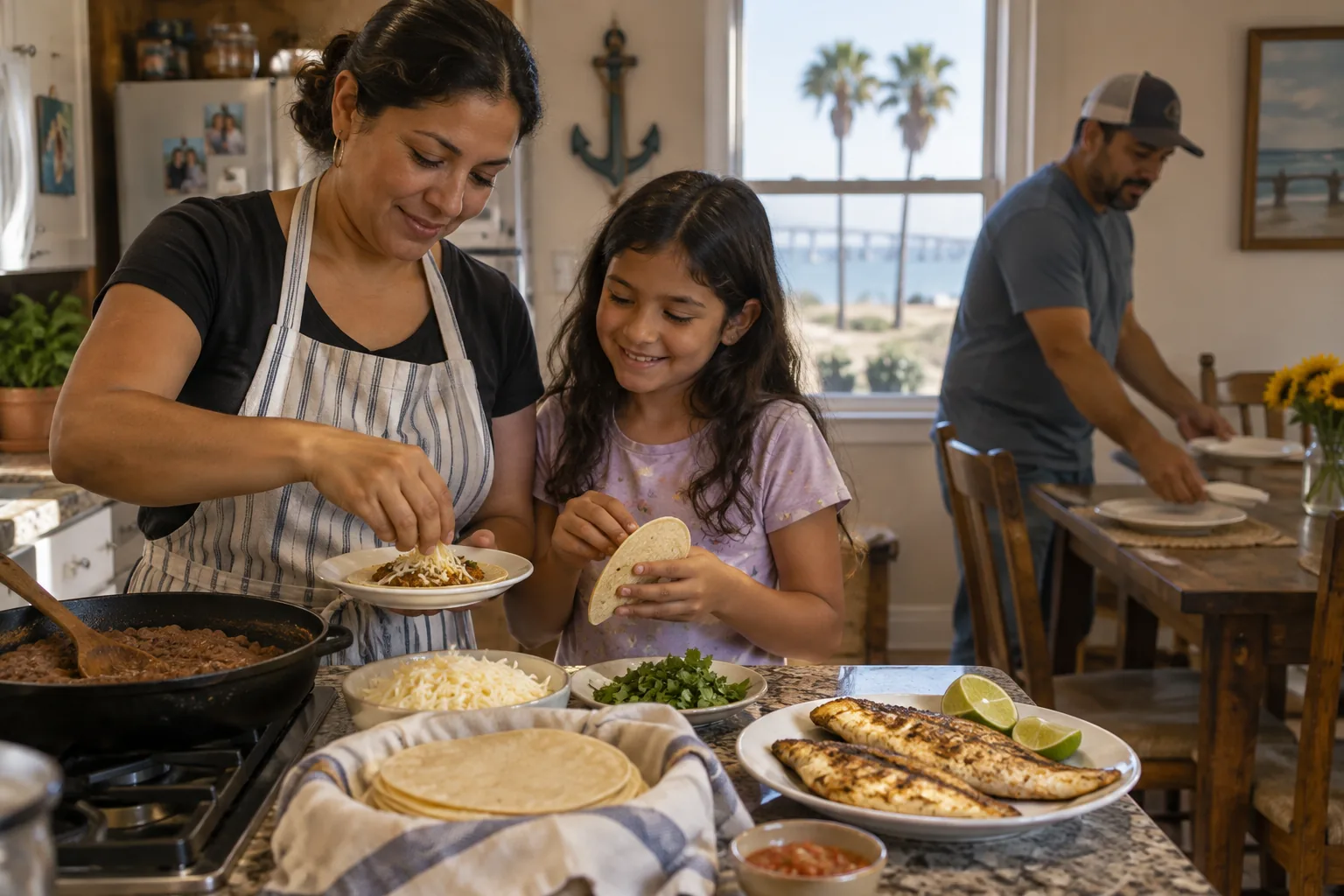
Fish on Friday, cake on the feast: the Church’s calendar at your family table
What Catholic fasting and abstinence actually ask (and never ask of children), why shared meals matter, and a simple feast-and-fast calendar for this fall.
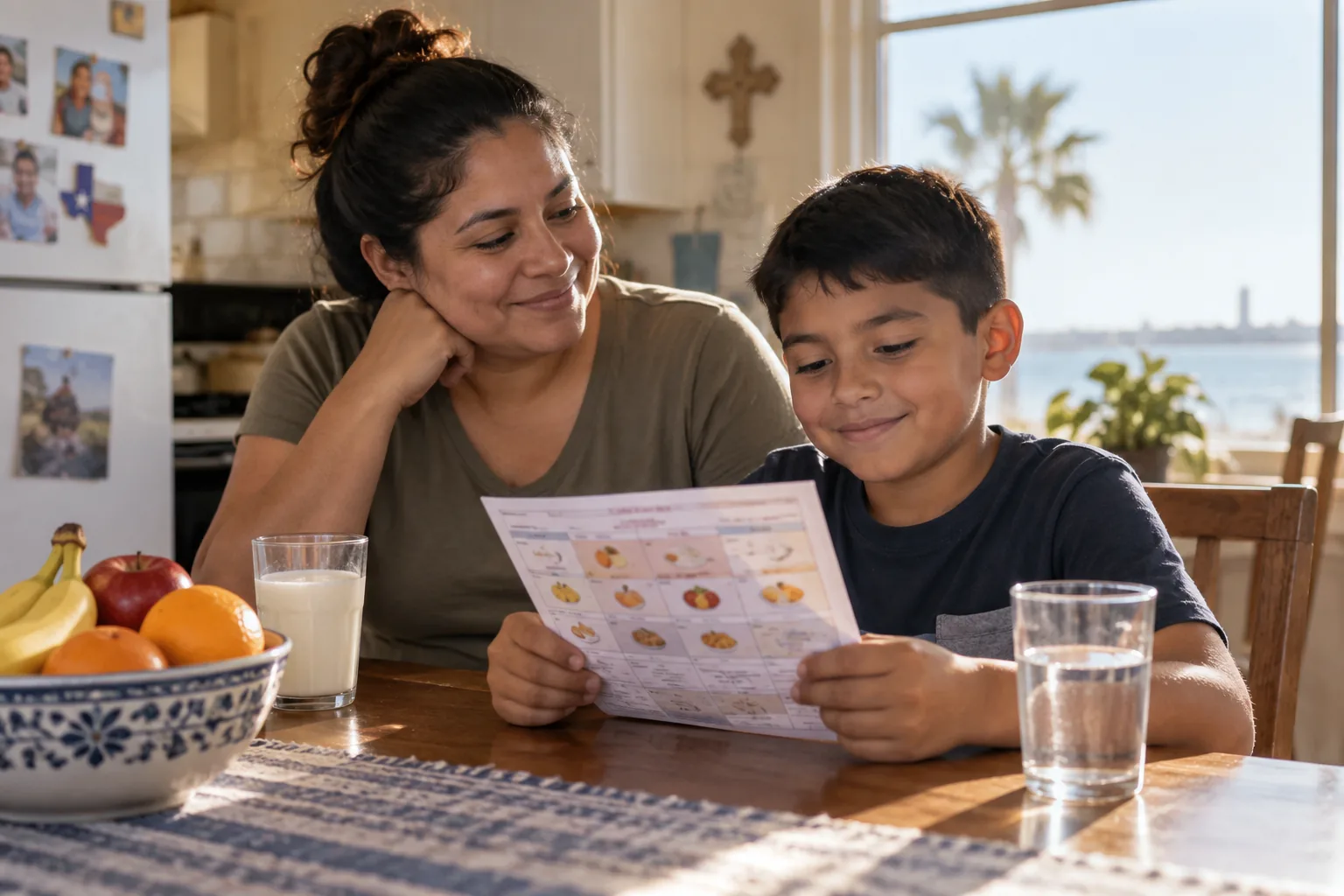
Whole milk is back on the school lunch tray. What should your child drink at home?
A new federal law lets schools serve whole milk again, and the new Dietary Guidelines favor full-fat dairy, while pediatricians’ guidance still says low-fat after age 2. Where the experts agree, where they don’t, and what matters more than fat.

Brother Sun, Sister Water: a St. Francis walk with your child this weekend
For the feast of St. Francis on October 4: how to pray his Canticle of the Creatures on a one-hour family walk, why time outside matters for Texas kids, and how to keep it safe in South Texas sun.