Corporal works of mercy, explained for a 9-year-old
Help your child understand seven ways to care for a neighbor, then choose one small act your family can do together.
Your child hears “corporal works of mercy” and asks what it means. You do not need a lesson plan. You can start at the kitchen table, while you fold laundry, or on the drive home.
Try this: “They are ways we care for people’s bodies because every person matters to God.” Corporal means bodily. Mercy means noticing someone’s need and responding with love. Pope Francis explained that these works meet people’s material needs, often through small, everyday actions.
Start with a person, not a vocabulary test
You might ask your child: “If you were hungry, would it help if someone only said, ‘Hope you find lunch’?”
Then ask: “What could that person actually do?”
That is the difference you are teaching. Kind words matter, but someone who needs food also needs something to eat. The Catechism describes works of mercy as actions that help our neighbors with their bodily and spiritual needs.
In Matthew 25, Jesus identifies himself with people who are hungry, thirsty, strangers, without clothing, sick, or imprisoned. In child-sized language: when we care for someone in need, we are serving Jesus, too.
The seven works, in everyday words
The Church’s traditional list includes feeding, giving drink, clothing, sheltering, visiting the sick and imprisoned, and burying the dead. Here are suggested ways to explain each one to your child, with an adult handling arrangements and safety.
1. Feed the hungry
“Help people get food when they do not have enough.”
You could let your child help prepare a meal for a family you know, or choose an item a pantry has requested. Ask what is needed before buying. The point is not clearing unwanted cans from your cabinet. It is helping someone eat.
2. Give drink to the thirsty
“Help people have something to drink when they need it.”
Try a simple family habit: when you set out water for an outdoor gathering in Corpus Christi, check whether everyone has been offered some. Let your child help fill cups. Explain that noticing who has been left out is part of caring.
3. Clothe the naked
“Help people get clothes that fit and give them comfort and privacy.”
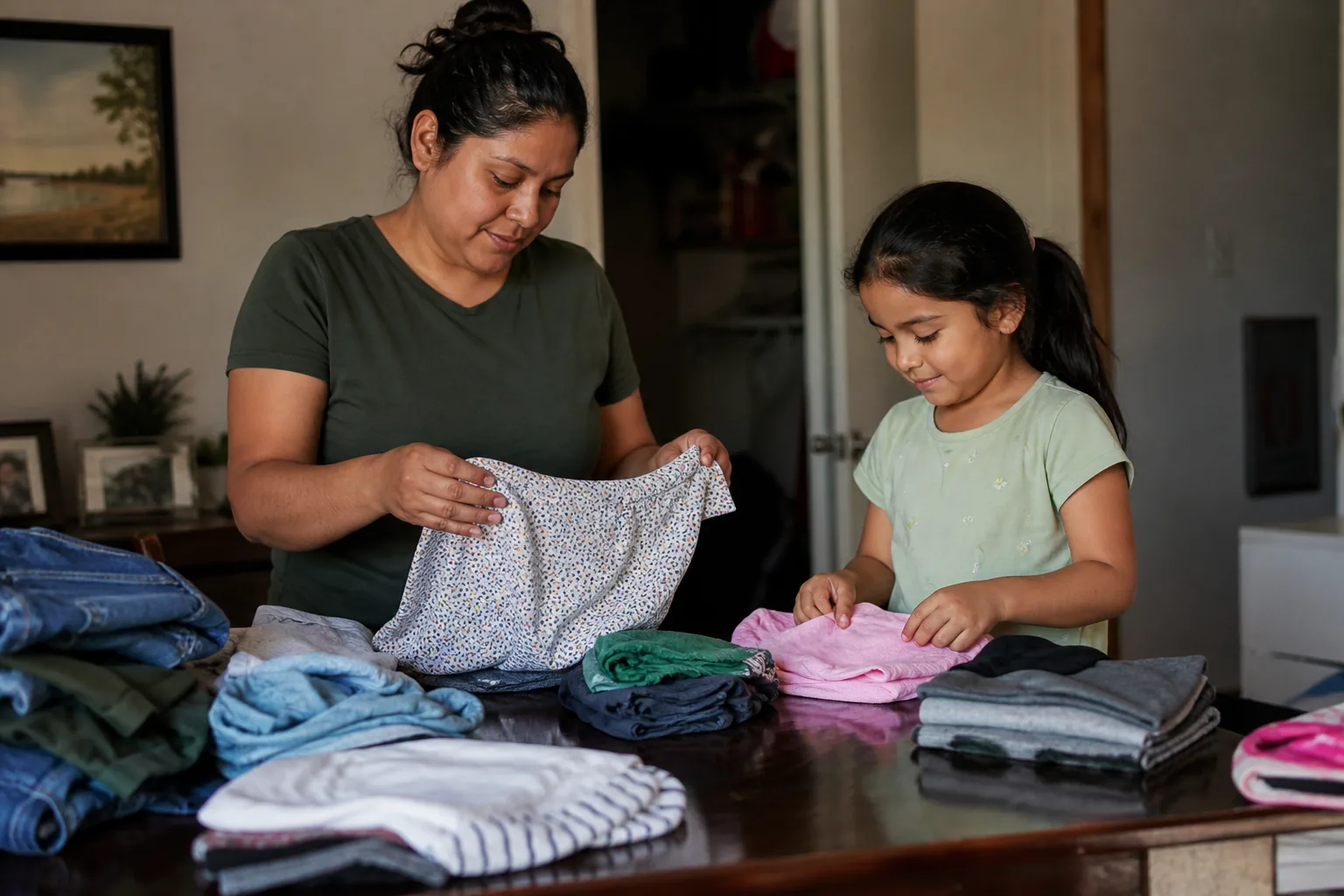
The old wording may make your child giggle. Explain it plainly, then sort a small stack together. Suggest checking for stains, broken zippers, and missing buttons. Ask: “Would we feel comfortable giving this to a friend?” Follow the receiving organization’s requests.
4. Shelter the homeless
“Help people who do not have a safe place to stay.”
Your child is not responsible for finding someone a home. You could ask a local organization whether it needs household supplies, then choose one requested task together. Welcoming a new classmate is another way to practice hospitality, but explain that people without housing also need practical help.
5. Visit the sick
“Help someone who is sick know they have not been forgotten.”
You might arrange a call with a relative, make a card, or help with a requested errand. Let the person and their caregiver decide what contact works for them. Your child’s role is companionship, not fixing the illness.
6. Visit the imprisoned
“Remember that people in prison are still people who deserve care.”
You can explain that caring about someone does not mean saying every action is right. For a 9-year-old, consider asking your parish about an established prison ministry and whether it has an appropriate family task. Do not arrange independent contact or share your child’s personal information.
7. Bury the dead
“Treat the body of someone who has died with respect, and care for the people who miss them.”
Your child does not have to perform a burial. You might attend a funeral together when appropriate, help bring a requested meal afterward, or accompany a relative to tend a family grave. Make room for questions without requiring your child to feel a certain way.
Keep the neighbor’s dignity at the center
Try setting three family ground rules: ask before helping, protect people’s privacy, and do not expect a thank-you performance. Skip photographs of people receiving help. Let your child participate without turning someone else’s difficult day into a public lesson.
If your own family needs food, you belong in this conversation, too. Coastal Bend Food Bank’s Find Food page lists partner pantries serving Corpus Christi. You can call 361-887-6291 with your ZIP code for a referral. Confirm eligibility and distribution details with the pantry before traveling.
Choose one next step
At Ignite Fit, our free family fitness and nutrition program, children practice caring for others as well as themselves. The program includes a shared corporal work of mercy. We are Catholic and open to everyone; faith is never a condition of help.
Want your child to take part? Use Ignite His Glory’s contact form and choose “Register a child” to request Ignite Fit’s season information and forms. Season One dates will be announced soon.
Sources
- Holy See, General Audience: Corporal and spiritual works of mercy, 2016 – Explains material needs, everyday acts of mercy, and the connection to Matthew 25.
- Holy See, Catechism of the Catholic Church: Love for the Poor, 1997 – Paragraphs 2443 through 2449 explain care for neighbors, practical assistance, and corporal works of mercy.
- Holy See, Misericordiae Vultus, 2015 – Paragraph 15 lists the seven corporal works of mercy and connects them with Jesus’ teaching.
- Coastal Bend Food Bank, Find Food, accessed 2026 – Supports local partner-pantry referrals, ZIP code assistance, eligibility checks, and the telephone number.
- Ignite His Glory, Ignite Fit, accessed 2026 – Confirms the free program, planned shared corporal work of mercy, and unannounced Season One dates.
- Ignite His Glory, Contact, accessed 2026 – Confirms the welcome to families of all beliefs and the registration inquiry process.
Ten weeks. One coach. No cost to your family.
Ignite Fit puts this into practice for children ages 8 to 17 in Corpus Christi — movement, a teaching kitchen and a family that learns alongside the child.
More from the blog.
Advent and Lent: family habits that outlast a season
Choose one small practice of prayer, attention or repair, then give it a place in family life that stays when the decorations come down.

The beloved physician: St. Luke’s feast and your child’s yearly checkup
The Church remembers St. Luke, patron of physicians, on Sunday, October 18. Here is what a physician saint can say to a parent deciding whether to book this year’s checkup.

Corpus Christi’s newest school weight numbers, and how to read them
We meant to explain why our best local child weight number was from 2013. Then we found 2023-24 school fitness data for Corpus Christi ISD.